

-Ruling has a huge bearing into Capitol Arson case
- By Abednego Davis
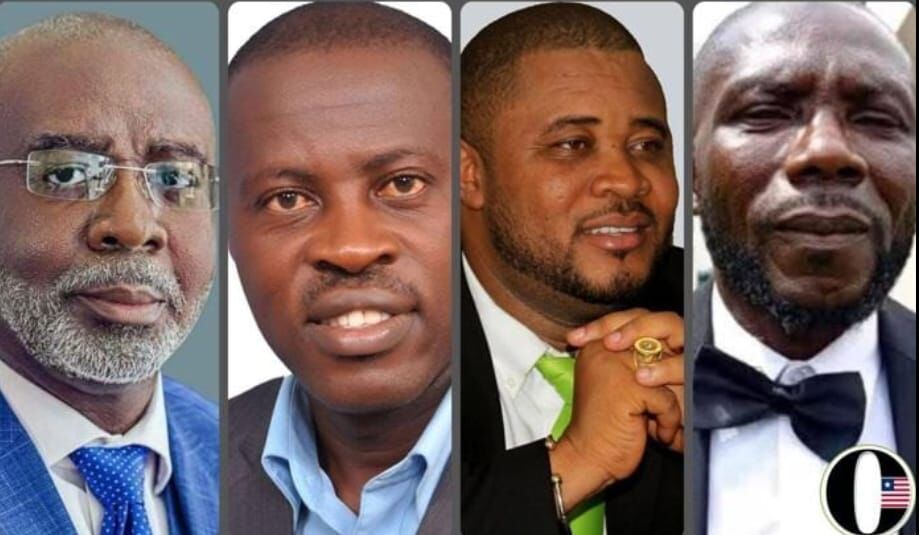
Judge Roosevelt Willie of Criminal Court ‘A’ will rule today. Thursday, September 4, over former Speaker Cllr. Fonati Koffa and his co-defendants’ pursuit of dismissal of the National Security Agency (NSA) calls log evidence in the capitol’s arson case.
In his ruling, Judge Willie must decide whether NSA, which obtained the call conversations, did so unlawfully or lawfully.
If the judge’s ruling were to favor the defendants, it means they would walk freely without answering to the multiple charges allegedly linking them to the December 18, 2024, inferno tore through the Capitol Building causing substantial damages.
The phone conversations are the pieces of evidence that the state is heavily relying on to prosecute the case.
The phone conversations contained in the call log reportedly link the defendants, including former Speaker, Cllr Fonati Koffa, and thirteen including three sitting lawmakers, to the December 18, 2024, inferno tore through the Capitol Building causing substantial damages, according to the prosecution.
Defense lawyers have indeed challenged the use of evidence derived from National Security Agency (NSA) phone surveillance, arguing it’s unconstitutional, and the exercise was carried out without any warrants from the court.
The defendants were indicted for multiple offences, including criminal attempt to commit murder, criminal mischief, criminal conspiracy, criminal facilitation, criminal solicitation, release of destructive forces, reckless burning or exploding, and reckless endangerment. Prosecutors allege that the December 18 blaze was not an accident, but the result of a carefully orchestrated plan devised the night before by Koffa and his associates.
These relate to mobile phone and email communications between alleged conspirators, which include Montserrado County Representatives Dixon W. Seboe (District #16) and Abu B. Kamara (District #15), as well as Grand Gedeh County Representative Jacob C. Deebie (District #3). The remaining defendants are: Kivi Bah, alias Kaba; Jerry Pokah, alias Tyrese; Stephen M. Broh; John Nyanti; Amos Koffa; Eric Susay; Thomas Isaac Etheridge; Patience Bestman; Harrilyn Grace Johnson; and Christian Kofa.
The mobile telephone calls and emails which were said to have been intercepted by the police are grounds for the case.
According to a court files, some members of the group obtained gasoline and other incendiary materials late on December 17. In the early hours of the following day, they allegedly carried out the attack on the Capitol, setting fire to the joint chambers, cutting electrical and electronic wiring, and destroying furniture. Damages are estimated at US$3.78 million.
The prosecution’s case is bolstered by audio recordings said to capture the conspirators discussing their intentions. In one recording, co-defendant Eric Susay is heard telling Thomas Isaac Etheridge that “you and your co-defendants were in readiness to receive gasoline to commence the arson attack on the Capitol Building.
The defense lawyers further argued that the evidence related to the collection and analysis by the National Security Agency (NSA) of telephone conversations of the defendants, was obtained, while some of them (defendants) were being held in the NSA’s detention cell, which they claim is a clear violation.
They also alleged that all of the evidence used by the prosecution was illegally obtained by the National Security Agency.
According to the defense, the evidence lacks a proper chain of custody, including the date, place, and time.
They also argued that their clients were tortured and sexually assaulted while being handcuffed by the NSA with the intent to extract confessions or information.
However, the prosecution strongly opposed the motion, urging the court to deny the defense’s application and allow the trial to proceed

